Year: 2026 spring
Weight: 10 grams sample and 200 grams bing
Country of origin: China, Yunnan province, Xishuangbanna
Yiwu Wangong (弯弓) – When a Great Village Became a Mountain Forest
Today, Wangong (弯弓) is regarded as one of the most sought-after and prestigious tea-producing areas in the whole of Yiwu. Few people realise, however, that only two centuries ago this was not a remote mountain forest hiding ancient tea trees, but the thriving heart of one of Yunnan’s greatest tea-producing regions.
During the Qing Dynasty, the historic region of Mansa (曼撒) was among the wealthiest of the Ancient Six Tea Mountains. Dozens of villages flourished across its mountains, supporting a population of well over ten thousand people. Among the most important settlements were Wangong Dazhai (弯弓大寨) and Mansa Old Street (曼撒老街), connected by the legendary Tea Horse Road (茶马古道), along which Pu-erh tea travelled towards Tibet, Southeast Asia and the imperial courts of China.
Historical records describe Wangong as the largest village within the Mansa region, home to more than four hundred households. It was also the site of an impressive Guan Di Temple, considered the largest and most magnificent temple among all of the Ancient Six Tea Mountains.
Towards the end of the nineteenth century, tragedy struck. Repeated devastating fires, followed, according to local tradition, by epidemics and armed conflicts, gradually forced the inhabitants to abandon their villages. Trade routes shifted elsewhere, and the once prosperous settlements slowly disappeared. Stone streets, homes and temples collapsed while nature patiently reclaimed everything that had once belonged to man.
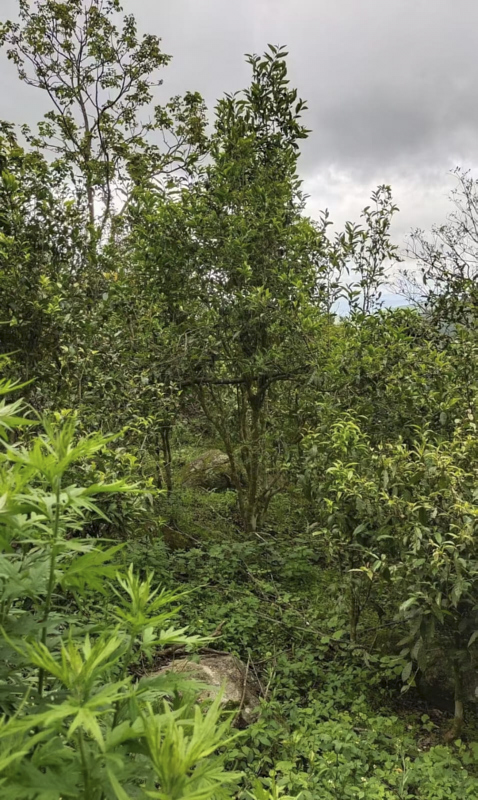
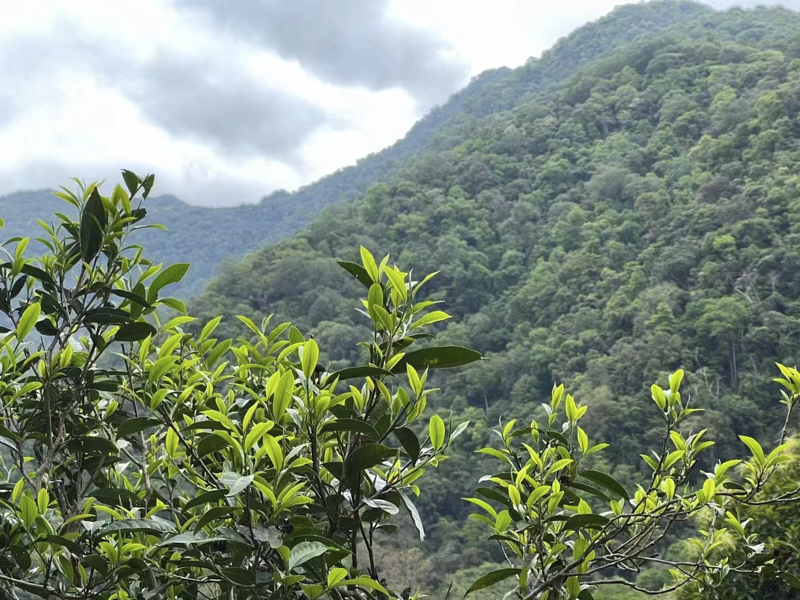
Over the following decades, subtropical mountain forests slowly enveloped the former tea gardens. Ancient tea trees remained scattered among towering forest giants, bamboo groves and dense native vegetation. Even today, Wangong bears little resemblance to a conventional tea plantation. It is a true mountain forest where ancient tea trees quietly hide far from roads and villages.
Administratively, today’s Wangong tea gardens belong to Dingjiazhai (丁家寨), a village inhabited by the Yao ethnic minority (瑶族). Our tea comes from Baichayuan (白茶园), one of Wangong’s most highly regarded tea gardens, where the tea trees continue to grow naturally within an untouched forest ecosystem.
Harvesting tea in Wangong remains exceptionally demanding. Tea pickers must cross dense mountain forests, wade through streams and follow narrow muddy trails that are often accessible only on foot or by motorcycle. The tea trees do not form continuous plantations but grow in isolated clusters scattered across the mountain slopes. Once one group of trees has been harvested, the journey continues over another ridge to reach the next hidden grove.
For this reason, people often say that every single leaf of Wangong must be earned. It is not a romantic marketing slogan but a simple description of the reality faced by those who harvest tea here every spring.
Perhaps it is precisely this long period of isolation that has preserved the extraordinary character of Wangong’s tea trees. Among experienced Pu-erh drinkers, Wangong is regarded as one of Yiwu’s greatest treasures—a place where history, untouched nature and centuries of tea cultivation have merged into a truly exceptional terroir.
Spring 2026 Tasting Notes
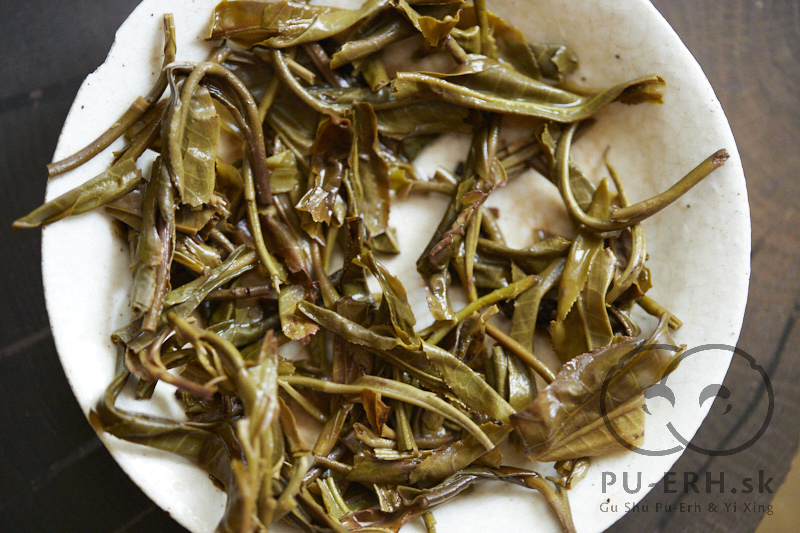
The first infusion, brewed without a rinse, opens the session with remarkable elegance. The first sip is pure and light, like a feather floating effortlessly on a mountain breeze. Its flavour is subtle, carrying delicate herbal notes and a refreshing clarity that hints at the tea’s true potential without revealing it all at once. Even after the first cup, a graceful lingering aftertaste quietly promises that the best is yet to come.
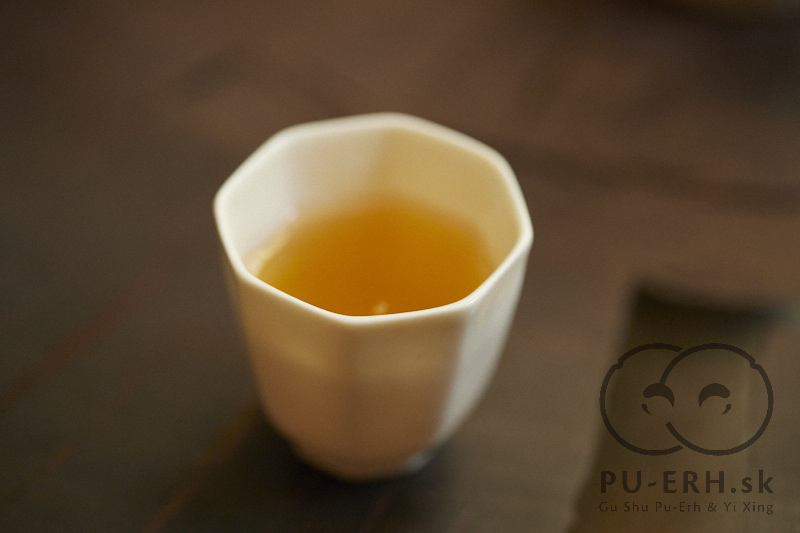
The second infusion takes the tea in a completely different direction. Suddenly the liquor becomes richer, thicker and far more expressive. After only a few sips, the mind seems to brighten. The unmistakable character of the ancient forest begins to emerge through pleasant bitterness, gentle astringency and deep earthy mountain flavours that steadily gain intensity.
By the third infusion, sweetness naturally intertwines with delicate flashes of bitterness. The tea feels vibrant and energetic, with its Cha Qi becoming immediately apparent. A particularly distinctive bitterness appears at the back of the throat, reminiscent of traditional herbal medicines prepared from wild mountain plants. It is this characteristic that makes Wangong so unique. The tea possesses remarkable strength, yet never feels coarse or aggressive. This is not the character of plantation tea but the vitality of a genuine mountain forest.
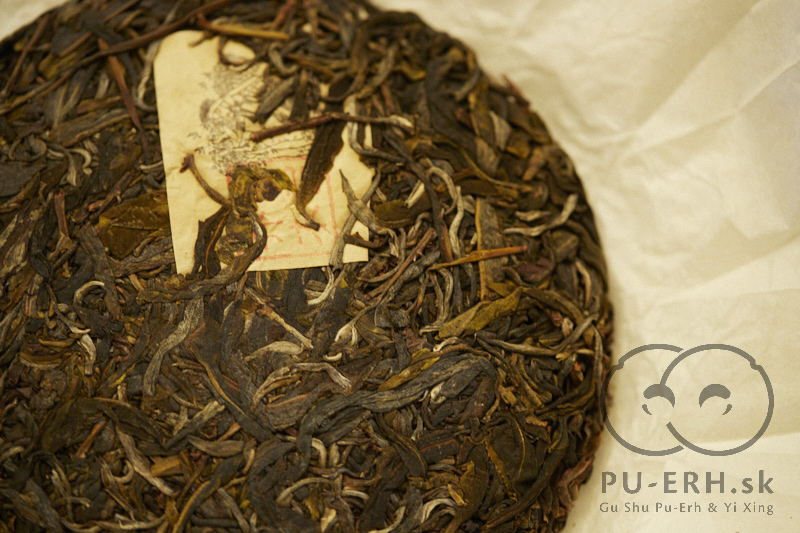
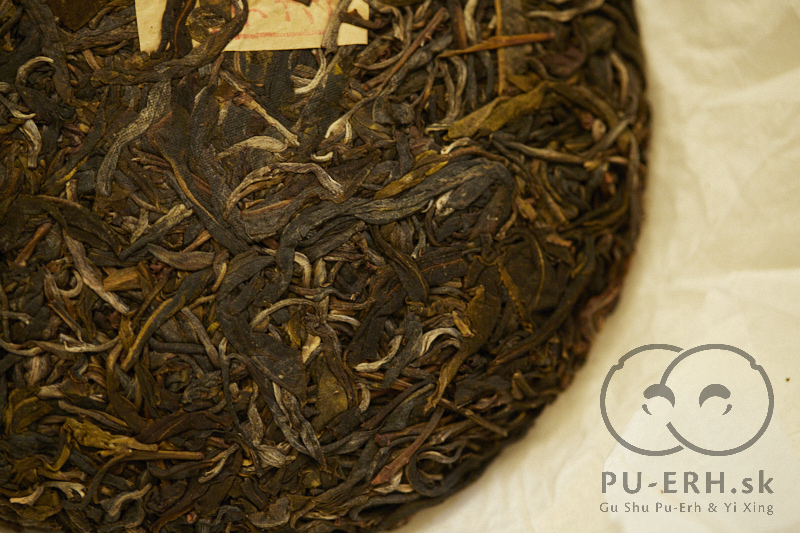
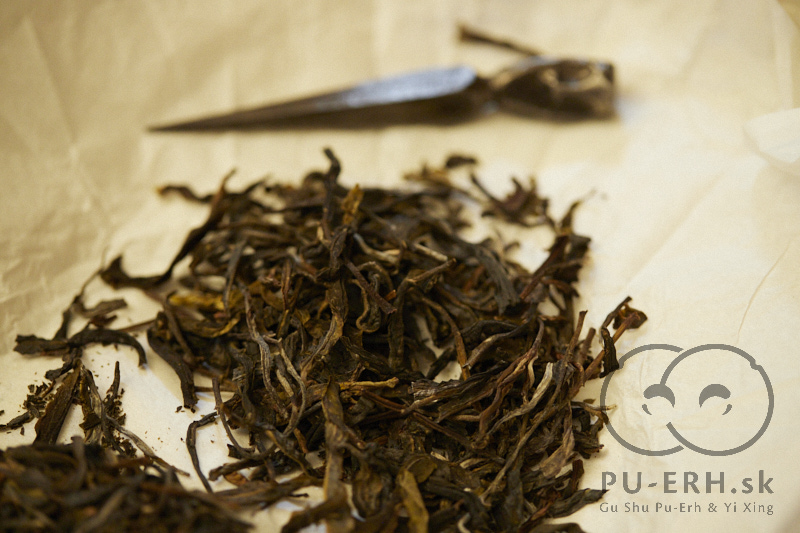
This Wangong comes from Qiaomu (乔木) tea trees—a naturally growing arbor form of the tea plant that, unlike regularly pruned plantation bushes, is allowed to develop into a tree. The Qiaomu trees in this garden reach approximately five metres in height and have been left untrimmed for decades. Their broad canopies spread naturally among the surrounding forest trees, while their roots draw nourishment from the rich mountain soil and the complex ecology of the native forest. This natural way of growing gives the tea its profound forest character, exceptional purity and remarkable complexity.
The aftertaste is extraordinarily long, carrying spicy, herbal and gently bitter notes, while the tea’s energy remains clearly present long after the final sip.
The fourth and fifth infusions reveal Wangong at its finest. The liquor becomes thick and luxurious, while the flavours unfold layer upon layer like a fireworks display. This is not the profile of a typical village-grown Yiwu tea. Instead, it reflects untamed forest tea trees that have spent decades absorbing nutrients from a rich mountain ecosystem. The extraordinary purity of the liquor is a direct reflection of the pristine environment in which these trees grow. For me, this purity remains one of the defining characteristics of truly exceptional tea.
As the session progresses, Wangong gradually softens. The liquor becomes rounder, smoother and increasingly silky, yet never loses its depth or identity. The impression of ancient forest, crystalline purity and calm, enduring energy accompanies every subsequent infusion until the very last cup. Wangong once again demonstrates why it is considered one of the finest forest teas of Yiwu—a tea that offers far more than beautiful flavours. It captures the atmosphere of an abandoned mountain forest where ancient tea trees have quietly continued their existence long after the people who once cultivated them disappeared. Every cup feels like a small journey into that forgotten landscape.
Rok: 2026 jar
Hmotnosť: 10 gramové vzorky a celý 200 gramový koláč
Krajina pôvodu: Čína, provincia Junnan, Xishuangbanna
Yiwu Wangong (弯弓) – Keď sa z veľkej dediny stal horský les
Dnes patrí Wangong (弯弓) medzi najvyhľadávanejšie a najprestížnejšie čajové oblasti celého Yiwu. Málokto si však uvedomuje, že ešte pred približne dvesto rokmi nešlo o odľahlý horský les ukrývajúci prastaré čajovníky, ale o pulzujúce centrum jednej z najvýznamnejších čajových oblastí Yunnanu.
Počas dynastie Qing bola historická Mansa (曼撒) jednou z najbohatších oblastí Starobylých šiestich čajových hôr. V jej horách prosperovali desiatky dedín a žilo tu viac než desaťtisíc obyvateľov. Medzi najvýznamnejšie sídla patrili Wangong Dazhai (弯弓大寨) a Mansa Old Street (曼撒老街), ktoré spájala legendárna Tea Horse Road (茶马古道) – obchodná cesta, po ktorej putoval puerh do Tibetu, juhovýchodnej Ázie aj na cisársky dvor v Číne.
Historické záznamy opisujú Wangong ako najväčšiu dedinu celej oblasti Mansa s viac než štyristo domácnosťami. Nachádzal sa tu aj veľkolepý chrám Guan Di, považovaný za najväčší a najhonosnejší zo všetkých Starobylých šiestich čajových hôr.
Koncom devätnásteho storočia však prišla tragédia. Oblasť zasiahli opakované ničivé požiare a podľa miestnych tradícií aj epidémie a ozbrojené konflikty. Obyvatelia boli postupne nútení opustiť svoje dediny a obchodné cesty sa presunuli inam. Kedysi prosperujúce sídla pomaly zmizli. Kamenné ulice, domy aj chrámy sa rozpadli a príroda si trpezlivo začala brať späť všetko, čo kedysi patrilo človeku.
Počas nasledujúcich desaťročí pohltil bývalé čajové záhrady subtropický horský les. Staré čajovníky zostali roztrúsené medzi mohutnými stromami, bambusovými hájmi a hustou pôvodnou vegetáciou. Ani dnes Wangong nepripomína klasickú čajovú plantáž. Je to skutočný horský les, v ktorom sa skupiny prastarých čajovníkov ukrývajú ďaleko od ciest a dedín.
Dnešné čajové záhrady Wangong administratívne patria pod dedinu Dingjiazhai (丁家寨) obývanú národnosťou Yao (瑶族). Náš čaj pochádza z podoblasti Baichayuan (白茶园), jednej z najuznávanejších lokalít Wangongu, kde staré čajovníky dodnes rastú prirodzene uprostred nedotknutého lesného ekosystému.
Aj dnes patrí zber vo Wangongu medzi najnáročnejšie v celom Yiwu. Zberači musia prechádzať hustými horskými lesmi, brodiť horské potoky a pokračovať po úzkych blatistých chodníkoch, ktoré sú často prístupné iba pešo alebo na motocykli. Staré čajovníky netvoria súvislé plantáže, ale rastú v menších skupinách roztrúsených po horských svahoch. Keď sa oberie jedna lokalita, cesta pokračuje cez ďalší hrebeň k ďalšej skupine stromov.
Práve preto sa o Wangongu často hovorí, že každý jeden lístok treba doslova vybojovať. Nie je to romantická marketingová fráza, ale jednoduchý opis reality, s ktorou sa zberači stretávajú každú jar.
Možno práve toto dlhé obdobie izolácie pomohlo zachovať výnimočný charakter miestnych čajovníkov. Medzi znalcami puerhu je Wangong považovaný za jeden z najväčších pokladov Yiwu – miesto, kde sa história, nedotknutá príroda a stáročná tradícia pestovania čaju spojili do jedinečného terroiru.
Degustačné poznámky – jar 2026
Prvý nálev, pripravený bez preplachu lístkov, otvára degustáciu s mimoriadnou ľahkosťou. Prvý dúšok je čistý a jemný ako pierko unášané horským vánkom. Chuť je spočiatku veľmi subtílna, s príjemnými bylinnými tónmi a sviežosťou, ktorá skôr naznačuje, než odhaľuje skutočný potenciál čaju. Už po prvých dúškoch však zostáva elegantná dochuť, ktorá sľubuje, že to najlepšie ešte len príde.
Druhý nálev naberie úplne iný smer. Náhle zosilnie, chuť sa stáva hutnou, bohatou a mimoriadne živou. Už po niekoľkých dúškoch akoby sa myseľ rozjasnila. Objavuje sa charakter prastarého lesa – príjemná horkosť, jemná zvieravosť a hlboké zemité horské tóny, ktoré postupne naberajú na intenzite.
V treťom náleve sa sladkosť prirodzene prelína s jemnými zábleskami horkosti. Čaj pôsobí nesmierne energicky a jeho Cha Qi je prítomná od prvých okamihov. Objavuje sa veľmi zvláštny horkastý pocit v zadnej časti hrdla, pripomínajúci niektoré tradičné prírodné bylinné liečivá. Práve tento moment robí Wangong takým jedinečným. Jeho sila je výrazná, no nepôsobí surovo. Nie je to charakter plantážového čaju, ale energia skutočného horského lesa.
Tento Wangong pochádza z qiaomu (乔木) čajovníkov – stromovej formy čajovníka, ktorá na rozdiel od nízkych pravidelne strihaných plantážových kríkov rastie prirodzene ako strom. Miestne qiaomu dosahujú približne päť metrov výšky a už desaťročia sa nestrihajú ani netvarujú. Ich koruny sa voľne rozprestierajú medzi okolitými stromami subtropického lesa, kde korene čerpajú živiny z bohatej lesnej pôdy a zložitého prírodného ekosystému. Práve tento spôsob života dáva čaju jeho hlboký lesný charakter, výnimočnú čistotu a prirodzenú komplexnosť.
Dochuť je mimoriadne dlhá a nesie v sebe korenisté, bylinné i jemne horkasté tóny, zatiaľ čo energia čaju zostáva citeľná ešte dlho po dopití šálky.
Štvrtý a piaty nálev predstavujú Wangong v celej jeho kráse. Nálev je hustý, plný a chute sa rozvíjajú ako ohňostroj – vrstva za vrstvou. Tento čaj nepôsobí ako typické dedinské Yiwu. Pripomína skôr nespútané lesné čajovníky, ktoré celé desaťročia čerpajú živiny z bohatého horského lesa. Mimoriadna čistota nálevu je priamym odrazom ekologicky zachovaného prostredia, z ktorého pochádza. Práve čistota je podľa mňa jedným z najdôležitejších znakov skutočne kvalitného čaju.
S pribúdajúcimi nálevmi sa Wangong postupne upokojuje. Chuť sa stáva jemnejšou, zaoblenejšou a hodvábne hladkou, no nestráca svoju hĺbku ani charakter. Zostáva prítomný pocit lesa, čistoty a pokojnej energie, ktorý sprevádza degustáciu až do poslednej šálky. Wangong tak opäť potvrdzuje, prečo patrí medzi najvýnimočnejšie lesné čaje celej oblasti Yiwu – čaj, ktorý neponúka iba krásne chute, ale dokáže sprostredkovať atmosféru opusteného horského lesa, v ktorom prastaré čajovníky pokračujú vo svojom živote dlho po tom, ako ľudia, ktorí ich kedysi pestovali, navždy odišli. Každá šálka je malou cestou do tejto dávno zabudnutej krajiny.







Reviews
There are no reviews yet.