


Empty
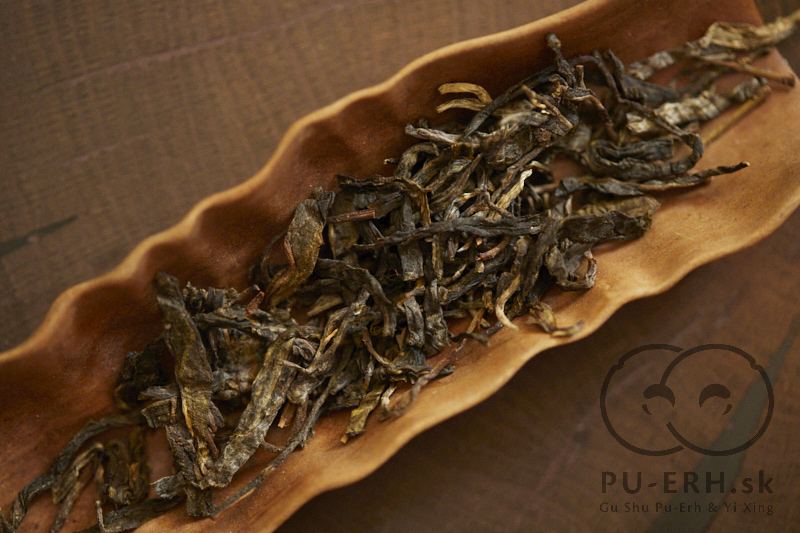
 sheng pu-erh
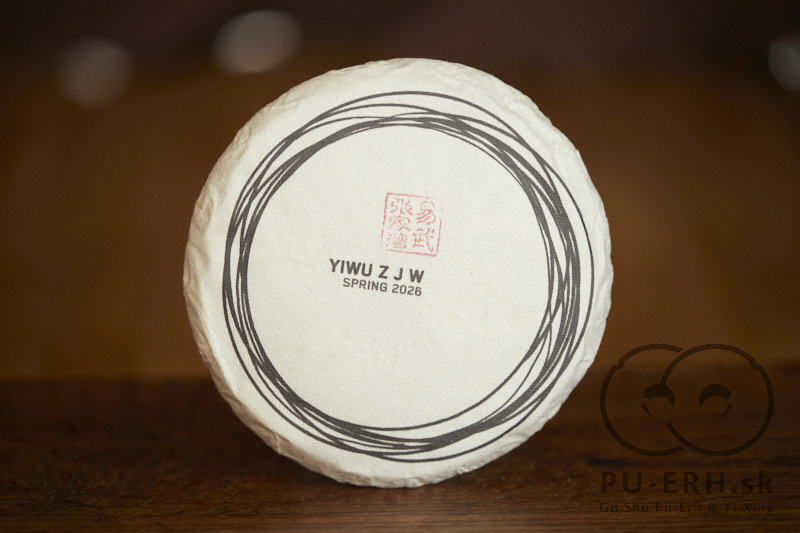
Year: 2026 spring
Weight: 10 grams sample and 200 grams bing
Country of origin: China, Yunnan province, Xishuangbanna
Today, Zhangjiawan (张家湾) is one of the most fascinating ancient tea-growing areas of Yiwu. Although it remains overshadowed by better-known names such as Wangong or Bohetang, it is here that one can still experience the atmosphere of the old Yiwu that existed more than a century ago.
Few people realise that the name Yiwu (易武) came into common use relatively late. During the Qing Dynasty, the true historical centre of this tea-producing region was Mansa (曼撒), one of the famous Ancient Six Tea Mountains. As commerce and administration gradually shifted toward Yiwu, the name Yiwu eventually became associated with the entire surrounding region. As a result, many of today’s most celebrated Yiwu teas actually originate from what was once the historic tea territory of Mansa.
Zhangjiawan lies within the Manla (曼腊) mountain range at an elevation of approximately 1,380 metres, separated from historic Mansa by only a single mountain ridge. In the Dai language, the word “La” (腊) means tea, suggesting that tea cultivation has been deeply rooted in this landscape for centuries.
The village itself was established during the Qing Dynasty through the merging of five smaller mountain settlements founded by families who migrated from Shiping County. Even today, the names of the surrounding hamlets preserve the legacy of the original Zhang, Xu, Zhu and Gao families who settled these mountains.
During the golden age of the Tea Horse Road, Zhangjiawan became one of the most important stopping points on the southern trading route leading through Laos into northern Vietnam.
Before the Second World War, every merchant transporting tea from the northern part of the Ancient Six Tea Mountains towards Lai Chau was required to pass through Zhangjiawan. The village naturally developed into a resting place where caravans watered their horses, merchants recovered from the mountain trails and prepared for the next stage of the journey.
From here, the tea continued through Laos to Lai Chau, then by river and sea to Haiphong, before eventually reaching Hong Kong and Guangzhou. A complete trading expedition required approximately four months to complete.
Its strategic position explains why the name Zhangjiawan appears so frequently in historical records describing the Pu-erh trade, often more prominently than many other villages of Yiwu.
Today, aged Zhangjiawan teas are sought after by collectors around the world. Few people know that during the late 1970s, however, the local tea had almost no commercial value.
Following 1976, the tea market collapsed. Purchase prices fell dramatically and demand nearly disappeared. Faced with difficult circumstances, many local families cut down large numbers of ancient tea trees because maintaining them no longer provided a livelihood. This difficult period resulted in some of the greatest losses of the region’s original tea trees.
Conditions gradually began to improve during the late 1990s. Since around 1998, local tea farmers have stopped controlling the height of their tea trees through repeated pruning, allowing them instead to resume their natural growth. No pesticides are used, and cultivation is generally limited to removing damaged branches when necessary.
Today, the largest trees reach heights of nearly ten metres, while many average around five metres. Some trunks have become so massive that harvesting requires ladders or simple wooden platforms. Local growers estimate that many of the oldest surviving trees are between 200 and 300 years old.
One of Zhangjiawan’s most distinctive traditions is a cultivation method known as Liuye Cha (柳叶茶), literally “Willow Leaf Tea.”
This does not describe a separate tea cultivar but rather a traditional method of managing the tea trees that has been refined over generations. During harvesting, only the youngest shoots are picked, while the main structural branches remain untouched, allowing the trees to develop broad, naturally shaped crowns. This cultivation philosophy has been passed down from one generation to the next and remains one of the oldest surviving tea-growing traditions in Yiwu.
Today, Zhangjiawan remains a peaceful mountain village hidden within the forests of historic Mansa. Its teas are celebrated for their elegant floral aromas, generous sweetness, silky texture, gentle astringency and long, refined finish.
Although the name Zhangjiawan may not yet enjoy the same worldwide recognition as Wangong or Bohetang, its remarkable history, ancient tea trees and position along one of the most important historical trade routes of Pu-erh make it one of the most authentic tea destinations in the whole of Yiwu.
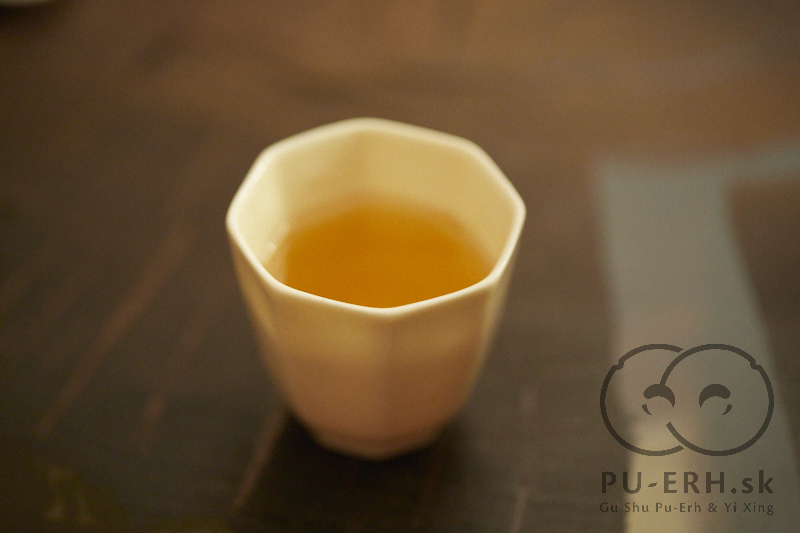
The first infusion immediately reveals extraordinary purity together with remarkable vigour. The liquor is simultaneously thick and silky, yet carries a subtle untamed roughness that reminds me this tea comes from the forests surrounding the abandoned old village of Zhangjiawan. Long after the original villagers moved further down the mountain, the ancient tea trees remained behind, quietly reclaiming their place within the wilderness. That feeling is unmistakably reflected in every cup.
Even after the first infusion has been poured, the empty fairness pitcher fills the room with an astonishing spectrum of aromas. It is one of those rare teas whose fragrance continues to evolve long after the liquor itself has disappeared.
The second infusion introduces an unusually captivating balance between sweetness and bitterness. Neither dominates the other. Instead, they intertwine so seamlessly that they become a single, harmonious flavour, creating a profile that is both distinctive and irresistibly enjoyable.
By the third infusion, the entire tea gains even greater depth and expression. The exceptional spring weather has given the leaves remarkable concentration while preserving outstanding clarity. Every flavour becomes more vivid, yet the liquor never loses its elegant balance.
The fourth infusion unmistakably reveals the historic character of Mansa. Those familiar with old Yiwu teas will immediately recognise its identity. Yet this year’s spring harvest expresses it with exceptional precision—crystal clear, vibrant and remarkably sharp, while remaining wonderfully refined.
For me, the sixth infusion is pure bliss. Even before taking a sip, simply bringing the cup close to the nose evokes the wild mountain forests from which these leaves originate. The aroma alone transports the imagination to the abandoned forests of old Zhangjiawan. After swallowing, a delicate yet remarkably persistent aftertaste lingers seemingly without end. The sweetness unfolds in beautiful waves, almost like a rhythm of long sweetness followed by a brief, lively burst of bitterness, before returning once again to sweetness.
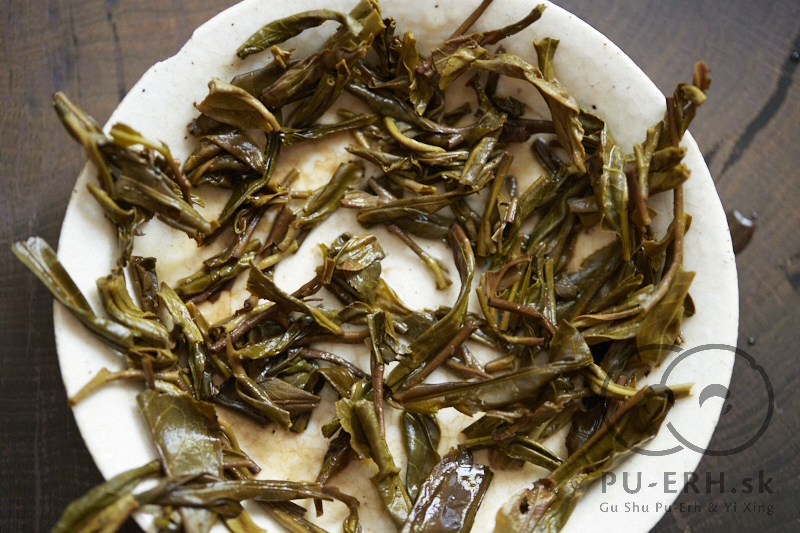
Several outstanding infusions follow, gradually evolving towards warm sweet-spicy notes while retaining the remarkable purity that defines this tea. Throughout the session, Zhangjiawan expresses both the elegance of Yiwu and the forgotten wilderness of historic Mansa. It is a tea that does not overwhelm through sheer power, but through authenticity, complexity and an extraordinary ability to capture the spirit of a place that time has almost forgotten.
Rok: 2026 jar
Hmotnosť: 10 gramové vzorky a celý 200 gramový koláč
Krajina pôvodu: Čína, provincia Junnan, Xishuangbanna
Dnes patrí Zhangjiawan (张家湾) medzi najzaujímavejšie starobylé čajové oblasti Yiwu. Hoci zostáva v tieni slávnejších mien, ako sú Wangong či Bohetang, práve tu možno dodnes cítiť atmosféru starého Yiwu spred viac než sto rokov.
Málokto si uvedomuje, že názov Yiwu (易武) sa pre túto čajovú oblasť začal používať až pomerne neskoro. Počas dynastie Qing bolo skutočným historickým centrom regiónu Mansa (曼撒) – jedna zo slávnych Starobylých šiestich čajových hôr. Keď sa obchodné aj administratívne centrum postupne presunulo do Yiwu, názov Yiwu začal označovať celý širší región. Mnohé z dnešných najvyhľadávanejších čajov označovaných ako Yiwu tak v skutočnosti pochádzajú z územia historickej čajovej oblasti Mansa.
Zhangjiawan sa nachádza v pohorí Manla (曼腊) v nadmorskej výške približne 1 380 metrov, len jeden horský hrebeň od historickej oblasti Mansa. V jazyku národnosti Dai znamená slovo „La“ (腊) jednoducho čaj, čo naznačuje, že pestovanie čajovníkov má v tomto kraji stáročnú tradíciu.
Dedina vznikla počas dynastie Qing spojením piatich menších horských osád, ktoré založili rodiny prisťahované z okresu Shiping. Dodnes názvy okolitých osád pripomínajú pôvodné rody Zhang, Xu, Zhu a Gao, ktoré sa tu usadili.
Počas zlatého obdobia Čajovej konskej cesty bol Zhangjiawan jednou z najdôležitejších zastávok na južnej obchodnej trase vedúcej cez Laos do severného Vietnamu.
Pred druhou svetovou vojnou musel každý obchodník prevážajúci čaj zo severnej časti Starobylých šiestich čajových hôr smerom do vietnamského Lai Chau prechádzať práve cez Zhangjiawan. Dedina sa prirodzene stala miestom odpočinku karaván, kde sa kone napájali, obchodníci si oddýchli po horských cestách a pripravovali sa na ďalšiu etapu svojej dlhej cesty.
Odtiaľ pokračoval čaj cez Laos do Lai Chau, následne riečnou a námornou cestou do Haiphongu a ďalej do Hongkongua Guangzhou. Celá obchodná výprava tam aj späť trvala približne štyri mesiace.
Práve táto strategická poloha spôsobila, že meno Zhangjiawan sa v historických záznamoch o obchode s puerhom objavuje oveľa častejšie než názvy mnohých iných dedín oblasti Yiwu.
Dnes sú staré čaje zo Zhangjiawanu vyhľadávané zberateľmi po celom svete. Len málokto však vie, že koncom sedemdesiatych rokov minulého storočia nemal miestny čaj takmer žiadnu hodnotu.
Po roku 1976 sa trh s čajom prakticky zrútil. Výkupné ceny prudko klesli a dopyt takmer zmizol. Mnohé miestne rodiny preto vyrúbali veľké množstvo starých čajovníkov, pretože ich pestovanie už nedokázalo zabezpečiť obživu. Práve toto obdobie spôsobilo najväčšie straty pôvodných čajovníkov v celej oblasti.
Situácia sa začala meniť až koncom deväťdesiatych rokov. Približne od roku 1998 prestali miestni pestovatelia udržiavať čajovníky pravidelným znižovaním a nechali ich opäť rásť prirodzeným spôsobom. Nepoužívajú pesticídy a do rastu stromov zasahujú iba odstránením poškodených konárov.
Najväčšie čajovníky dnes dorastajú až do výšky desiatich metrov, pričom mnohé dosahujú priemernú výšku okolo piatich metrov. Niektoré kmene sú natoľko mohutné, že pri zbere je potrebné používať rebríky alebo jednoduché drevené plošiny. Miestni pestovatelia odhadujú vek najstarších zachovaných stromov na približne 200 až 300 rokov.
Jednou z najzaujímavejších tradícií Zhangjiawanu je spôsob pestovania nazývaný Liuye Cha (柳叶茶), doslova „čaj vŕbových listov“.
Nejde o samostatnú odrodu čajovníka, ale o tradičný spôsob jeho pestovania, ktorý sa zdokonaľoval celé stáročia. Pri zbere sa oberajú iba najmladšie výhonky, zatiaľ čo hlavné konáre zostávajú zachované. Vďaka tomu si čajovníky vytvárajú široké, prirodzene tvarované koruny. Tento spôsob pestovania sa dedí z generácie na generáciu a patrí medzi najstaršie zachované pestovateľské tradície v oblasti Yiwu.
Aj dnes zostáva Zhangjiawan pokojnou horskou dedinou ukrytou v lesoch historickej oblasti Mansa. Jeho čaje sú známe elegantnou kvetinovou arómou, bohatou sladkosťou, jemnou zvieravosťou, hodvábnou textúrou nálevu a dlhou, ušľachtilou dochuťou.
Hoci meno Zhangjiawan zatiaľ nedosiahlo takú svetovú známosť ako Wangong alebo Bohetang, jeho bohatá história, starobylé čajovníky a poloha na jednej z najvýznamnejších obchodných ciest starého puerhu z neho robia jedno z najautentickejších miest celej oblasti Yiwu.
Už prvý nálev odhaľuje výnimočnú čistotu a zároveň pozoruhodnú energiu. Nálev je hustý a hodvábne jemný, no zároveň v sebe nesie jemný nádych divokosti a prirodzenej drsnosti. Akoby pripomínal horské lesy obklopujúce starú dedinu Zhangjiawan, ktorú jej obyvatelia pred mnohými rokmi opustili a presťahovali sa nižšie do údolia. Staré čajovníky však zostali na svojom mieste a les si ich opäť vzal za svoje. Tento pocit nedotknutej prírody je prítomný v každom dúšku.
Aj po zliatí prvého nálevu naplní prázdna degustačná kanvička miestnosť neuveriteľne bohatou škálou vôní. Patrí medzi tie vzácne čaje, ktorých aróma sa ďalej rozvíja aj vtedy, keď už samotný nálev dávno zmizol zo šálky.
Druhý nálev prináša nezvyčajne harmonické spojenie sladkosti a horkosti. Ani jedna z nich neprevláda. Naopak, obe chute sa navzájom tak dokonale prelínajú, že vytvárajú jediný celok – chuť mimoriadne prirodzenú, harmonickú a nesmierne lahodnú.
V treťom náleve sa všetky chute ešte viac rozvinú. Mimoriadne priaznivé jarné počasie dodalo čajovým lístkom výnimočnú koncentráciu, pričom si zachovali nádhernú čistotu. Každý ďalší dúšok pôsobí plnšie, živšie a výraznejšie, no zároveň zostáva dokonale vyvážený.
Štvrtý nálev už jasne odhaľuje charakter historickej oblasti Mansa. Každý, kto pozná staré čaje z Yiwu, ho okamžite rozpozná. Tohtoročná jar ho však predstavuje v mimoriadne čistej, presnej a brilantnej podobe. Chuť je ostrá, živá a zároveň elegantná.
Pre mňa je šiesty nálev čistou blaženosťou. Už samotné priblíženie šálky k nosu a vdýchnutie jej arómy okamžite vyvoláva predstavu divokých horských lesov, odkiaľ tento čaj pochádza. Akoby človek na chvíľu stál uprostred opusteného starého Zhangjiawanu. Po prehltnutí zostáva na podnebí jemná, no neuveriteľne dlhotrvajúca dochuť. Sladkosť prichádza vo vlnách – dlhá sladkosť, krátky záblesk horkosti a opäť návrat sladkosti, ktorý pretrváva ešte dlho po dopití šálky.
Nasleduje niekoľko ďalších nádherných nálevov, ktoré sa postupne rozvíjajú smerom k sladko-korenistým tónom, pričom si počas celej degustácie zachovávajú výnimočnú čistotu. Zhangjiawan počas celej ochutnávky nádherne spája eleganciu Yiwu s divokosťou zabudnutej historickej oblasti Mansa. Nie je to čaj, ktorý by ohromoval svojou silou. Očarí skôr svojou autentickosťou, komplexnosťou a jedinečnou schopnosťou sprostredkovať ducha miesta, na ktoré čas takmer zabudol.
You must be logged in to post a review.
Reviews
There are no reviews yet.