Year: 2026 spring
Weight: 10 grams sample and 250 grams bing
Country of origin: China, Yunnan province, Xishuangbanna
Wrapper & Pressing
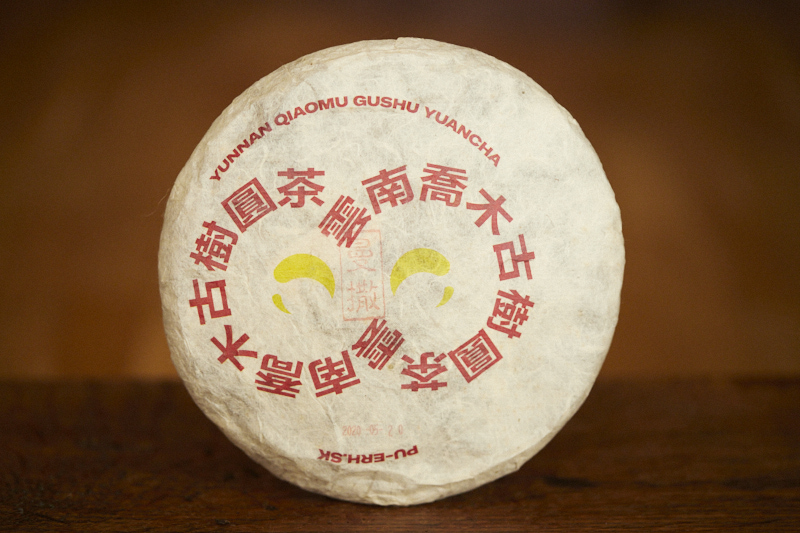
This tea comes in the vintage-style wrapper used for this 2020 year’s production. The tea leaves in the pu-erh.sk logo are coloured yellow, reflecting the meaning of Huangpian (黄片) — literally, “yellow leaves” and also it was simile to yellow marks puerh teas from the past (of course these had nothing to do with huangpian teas).
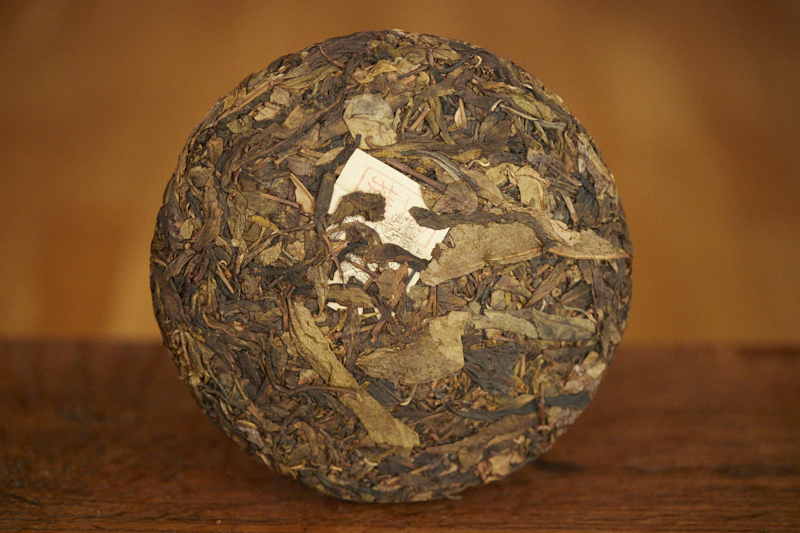
The cake is pressed just right: compact enough to age beautifully, yet loose enough that there is no battle when dismantling it. The leaves come apart easily and naturally, ready for brewing.
What is Huangpian?
Huangpian (黄片) refers to the larger, more mature leaves that are separated from the carefully selected leaf material during processing. They are usually bigger, thicker and more fully developed than the leaves chosen for the main cake.
A particular advantage of this Huangpian is that it is made entirely from spring tea leaves from the same high-quality Zhang Jia Wang material. This gives it considerably more character than ordinary Huangpian. Although made from the leaves normally left aside, it still carries the character and energy of the original gushu material — in a sense, a different expression of the same tea.
From Mansa to Yiwu
This tea was called Mansa when it was produced in 2020, which is why the original wrapper carries the red Mansa stamp. Mansa (漫撒) is the historical name of this part of the Yiwu tea region. Over time, Yiwu (易武) became the broader and more commonly used designation for the area, and Mansa is today generally regarded as part of the wider Yiwu tea region.
The tea comes specifically from Zhang Jia Wang (张家湾), an old tea-growing village within this historic Mansa/Yiwu area.
For a broader story of this mountain and its forest tea gardens, see also this year’s Yiwu Zhang Jia Wang. It gives a closer look at the place where this tea comes from and the character of its ancient forest environment.
The Speciality
The most unusual feature of this tea is that it is Huangpian made with pángxiè jiǎo (螃蟹脚, “crab’s foot”).
Approximately 2% of pángxiè jiǎo is blended into the tea, following an old Liming recipe that we have revived for this production. Pángxiè jiǎo is a small parasitic plant traditionally found growing on old tea trees. The material used here comes from Bada Mountain.
It is not often that you come across a Huangpian cake made in this way. Pángxiè jiǎo growing on old tea trees has become increasingly difficult to obtain and consequently rather expensive, making its use in a Huangpian cake particularly unusual.
Traditionally, small quantities of pángxiè jiǎo were used in puerh to influence the transformation and fermentation of the tea. From my own experience, I also find that it can make the tea feel more comfortable and easier to digest.
The same basic recipe was used in many private-order Liming cakes for Lao Ban Zhang, as well as in special gift cakes produced by Liming Diancang in 2007 and in other Liming productions. Here, however, the combination with high-quality spring Huangpian creates something quite different and rather rare.
Material & Storage
This is also a special opportunity to taste this tea after six years of storage in Central Europe.
The drier European storage gives the tea a character quite different from puerh stored in Yunnan, Hong Kong, Taiwan or other humid environments, while preserving much of the original flavour and aroma profile.
For Huangpian in particular, this ageing is interesting: with time, the initially more rustic character of the larger leaves becomes softer and more integrated, revealing qualities that are easy to overlook in a young tea.
Tasting Notes
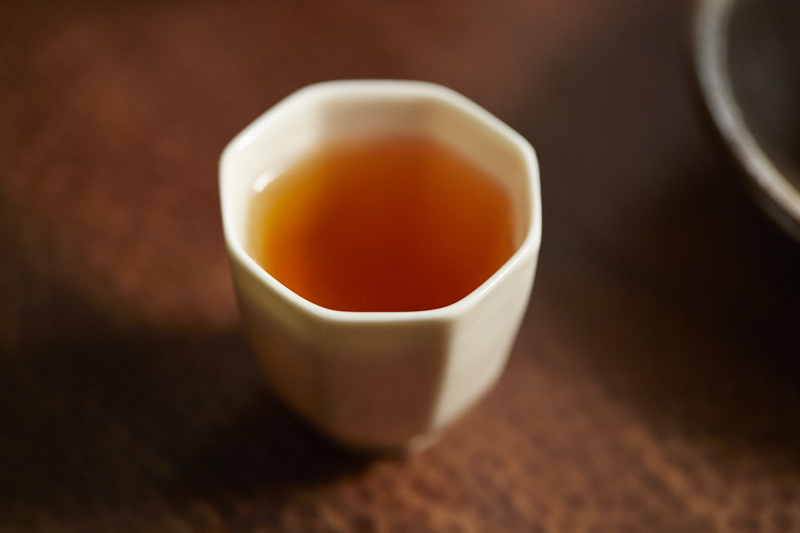
The tea starts strong and direct, with a clear energy and an initial roughness that quickly reminds you that this is not ordinary Huangpian. At the same time, the purity of the material is immediately apparent. Even these larger, separated leaves produce a remarkably enjoyable and drinkable tea.
A beautiful sweetness emerges in the second infusion. The characteristic astringency of Huangpian is certainly present, but rather than standing apart, it becomes incorporated into the overall flavour profile, together with pleasant ageing notes.
At first, the tea seems quite straightforward: astringent, sweet, then gently bitter, with a pleasant chá qì and a long, nutty aftertaste. But from the third infusion onwards, it begins to reveal a much more complex character.
I have always felt that Huangpian from high-quality gushu has considerably more to offer than one might expect from leaves that were simply separated from the selected material. Alongside the astringency, there are woody notes, sweetness, minerality and a growing richness.
Ageing makes this type of tea increasingly comfortable to drink. The later infusions become thicker, juicier and more rounded, while the very late brews develop a pleasant acidity with a citrusy character.
A very tasty and rewarding tea — and a fascinating example of how much character can remain in the leaves that are normally left behind.
Explore the Other Zhang Jia Wang Teas
If you are interested in comparing this tea with the selected leaf material, take a look at the exclusive-leaf Zhang Jia Wang cake as well as this year’s Yiwu Zhang Jia Wang.
Tasting them side by side is a great way to explore how the same forest, the same tea trees and the same spring harvest can express themselves through different grades of leaf material.
This tea was reviewed by monoteist from puerh.blog here in the past
Rok: 2020
Hmotnosť: 10 gramové vzorky a celý 250 gramový koláč
Krajina pôvodu: Čína, provincia Junnan, Xishuangbanna
Obal a lisovanie
Tento čaj je zabalený do obalu vo vintage štýle, ktorý bol použitý pre produkciu z roku 2020. Čajové lístky v logu pu-erh.sk sú vyfarbené na žlto, čo odkazuje na význam názvu Huangpian (黄片) — doslova „žlté listy“. Zároveň to bola určitá analógia so žltými označeniami na pu-erhoch z minulosti (samozrejme, tie nemali nič spoločné s čajmi Huangpian).
Koláč je vylisovaný tak akurát: dostatočne kompaktne na to, aby krásne dozrieval, ale zároveň dostatočne voľne na to, aby pri jeho rozoberaní nebolo treba zvádzať žiadnu bitku. Lístky sa oddeľujú ľahko a prirodzene a sú pripravené na zalievanie.
Čo je Huangpian?
Huangpian (黄片) označuje väčšie, zrelšie listy, ktoré sa počas spracovania oddeľujú od starostlivo vybraného listového materiálu. Zvyčajne sú väčšie, hrubšie a plnšie vyvinuté než listy vybrané do hlavného koláča.
Veľkou výhodou tohto Huangpian je, že je vyrobený výhradne z jarných čajových lístkov z rovnakého kvalitného materiálu zo Zhang Jia Wang. Vďaka tomu má podstatne viac charakteru než bežný Huangpian. Hoci je vyrobený z lístkov, ktoré sa za normálnych okolností oddeľujú bokom, stále si zachováva charakter a energiu pôvodného gushu materiálu — v istom zmysle ide o inú podobu toho istého čaju.
Od Mansa k Yiwu
Tento čaj sa v čase svojej produkcie v roku 2020 nazýval Mansa, preto je na pôvodnom obale červená pečiatka Mansa. Mansa (漫撒) je historický názov tejto časti čajového regiónu Yiwu. Postupom času sa Yiwu (易武) stalo širším a bežnejšie používaným označením pre túto oblasť a Mansa sa dnes vo všeobecnosti považuje za súčasť širšieho čajového regiónu Yiwu.
Čaj pochádza konkrétne zo Zhang Jia Wang (张家湾), starej čajovej dediny nachádzajúcej sa v tejto historickej oblasti Mansa/Yiwu.
Širší príbeh tejto hory a jej lesných čajových záhrad nájdete aj pri tohtoročnom Yiwu Zhang Jia Wang. Ponúka bližší pohľad na miesto, odkiaľ tento čaj pochádza, a na charakter jeho starobylého lesného prostredia.
Špecialita
Najnezvyčajnejšou vlastnosťou tohto čaju je, že ide o Huangpian s pángxiè jiǎo (螃蟹脚, „krabie nohy“).
Do čaju sú primiešané približne 2 % pángxiè jiǎo, podľa starej receptúry Liming, ktorú sme pre túto produkciu obnovili. Pángxiè jiǎo je malá parazitická rastlina, ktorá tradične rastie na starých čajovníkoch. Materiál použitý v tomto čaji pochádza z hory Bada.
Nie je práve bežné stretnúť Huangpian koláč vyrobený týmto spôsobom. Pángxiè jiǎo rastúce na starých čajovníkoch je čoraz ťažšie získať a v dôsledku toho je pomerne drahé, takže jeho použitie v Huangpian koláči je mimoriadne nezvyčajné.
Tradične sa malé množstvá pángxiè jiǎo používali v pu-eroch na ovplyvnenie transformácie a fermentácie čaju. Z vlastnej skúsenosti mám tiež pocit, že čaj vďaka nemu pôsobí príjemnejšie a ľahšie sa pije a trávi.
Rovnaká základná receptúra sa používala pri mnohých súkromných objednávkach koláčov Liming z Lao Ban Zhang, ako aj pri špeciálnych darčekových koláčoch, ktoré vyrobil Liming Diancang v roku 2007, a pri ďalších produkciách Liming. V tomto prípade však kombinácia s kvalitným jarným Huangpian vytvára niečo úplne odlišné a pomerne vzácne.
Materiál a skladovanie
Ide tiež o špeciálnu príležitosť ochutnať tento čaj po šiestich rokoch skladovania v strednej Európe.
Suchšie európske skladovanie dáva čaju charakter výrazne odlišný od pu-erhov skladovaných v Yunnane, Hongkongu, na Taiwane alebo v iných vlhkých prostrediach, pričom si zachováva veľkú časť pôvodného chuťového a aromatického profilu.
Pri Huangpian je toto zrenie obzvlášť zaujímavé: postupom času sa počiatočný rustikálnejší charakter väčších listov zjemňuje a viac integruje, čím odhaľuje vlastnosti, ktoré sa pri mladom čaji dajú ľahko prehliadnuť.
Chuťový profil
Čaj začína silno a priamo, s výraznou energiou a počiatočnou drsnosťou, ktorá vám rýchlo pripomenie, že toto nie je obyčajný Huangpian. Zároveň je okamžite zrejmá čistota materiálu. Dokonca aj tieto väčšie, oddelené listy vytvárajú pozoruhodne príjemný a dobre piteľný čaj.
V druhom náleve sa objavuje krásna sladkosť. Charakteristická trpkosť Huangpian je určite prítomná, ale namiesto toho, aby vystupovala samostatne, postupne sa začleňuje do celkového chuťového profilu spolu s príjemnými tónmi zrenia.
Spočiatku pôsobí čaj pomerne priamočiaro: trpký, sladký a potom jemne horký, s príjemným chá qì a dlhou orechovou dochuťou. Od tretieho nálevu však začína odhaľovať oveľa komplexnejší charakter.
Vždy som mal pocit, že Huangpian z kvalitného gushu má oveľa viac čo ponúknuť, než by človek očakával od listov, ktoré boli jednoducho oddelené od vybraného materiálu. Popri trpkosti sa objavujú drevité tóny, sladkosť, minerálnosť a postupne narastajúca plnosť.
Zrenie robí tento typ čaju čoraz príjemnejším na pitie. Neskoršie nálevy sú hustejšie, šťavnatejšie a zaoblenejšie, zatiaľ čo úplne neskoré nálevy prinášajú príjemnú kyslosť s citrusovým charakterom.
Veľmi chutný a odmeňujúci čaj — a fascinujúci príklad toho, koľko charakteru môže zostať v listoch, ktoré sa za bežných okolností nechávajú bokom.
Objavte aj ďalšie čaje zo Zhang Jia Wang
Ak máte záujem porovnať tento čaj s vybraným listovým materiálom, pozrite si aj exkluzívny Zhang Jia Wang z vybraných lístkov, ako aj tohtoročný Yiwu Zhang Jia Wang.
Ochutnať ich vedľa seba je skvelý spôsob, ako preskúmať, ako sa ten istý les, tie isté čajovníky a ten istý jarný zber môžu prejaviť prostredníctvom rôznych kvalitatívnych tried listového materiálu.
Recenzia tohto čaju blogerom monoteist tu na jeho stránke puerh.blog








Reviews
There are no reviews yet.