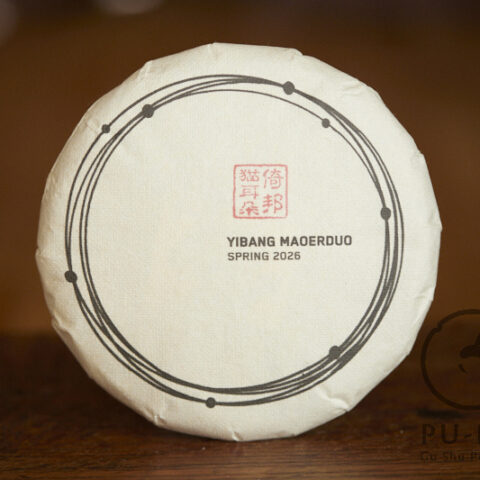











Year: 2026 spring
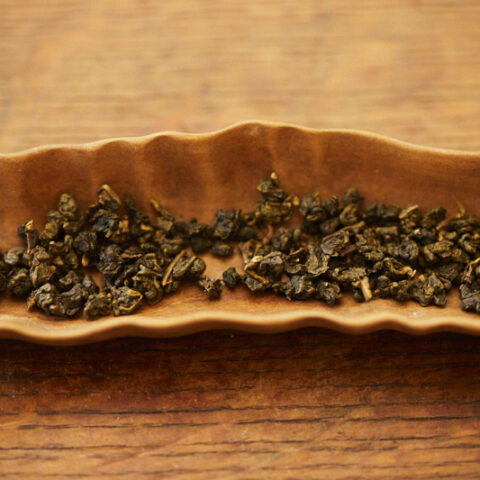
Weight: 10 grams sample and 200 grams bing
Country of origin: China, Yunnan province, Xishuangbanna
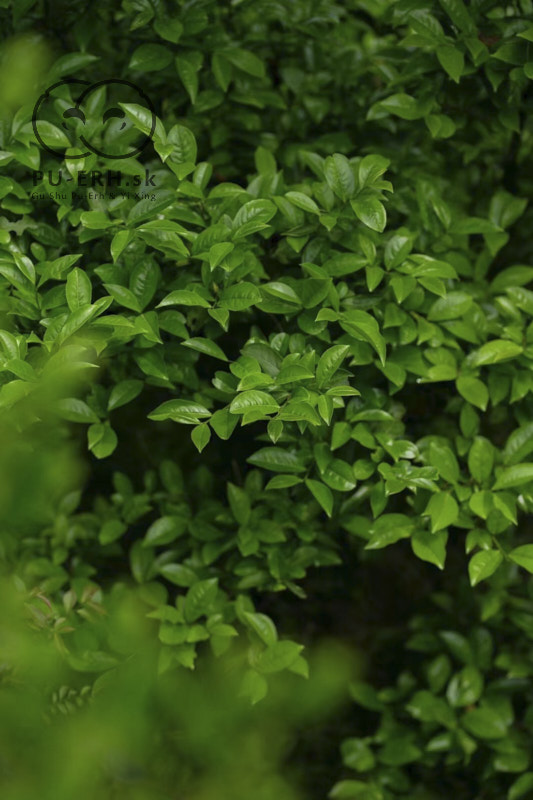
The exact origin of this tea remains deliberately blurred. Even today, only a handful of people know where these ancient tea trees truly grow. Hidden deep within one of Yiwu’s remote Guoyoulin (state forests), the garden lies far beyond ordinary tea trails, surrounded by dense subtropical jungle that has protected it for generations. Unlike many famous tea gardens that have become increasingly accessible, this forest has remained naturally guarded by its remoteness. Access is carefully controlled by a nearby village, whose residents have long acted as custodians of the ancient trees. Only a limited number of villagers are permitted to harvest a carefully allocated quantity of leaves each spring, helping preserve both the fragile ecosystem and the exceptional quality of the tea for future generations.
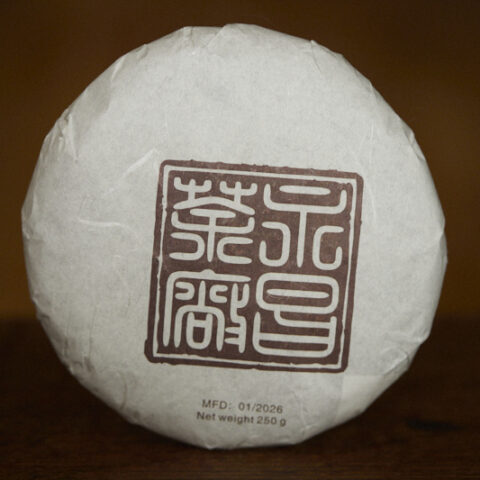
Mr. BigRiver affectionately refers to this tea by its poetic name, 空山幽韵 (Kōng Shān Yōu Yùn), which may be translated as The Quiet Charm of the Empty Mountains.
What is known, however, is how this remarkable tea first found its way into my life in 2019.
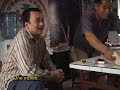
My friend, Mr. BigRiver, invited me to Yiwu to meet one of his old friends. Our host, the principal of one of Yiwu Town’s largest schools, had spent decades working with families from nearly every surrounding village. Through generations of former students and their parents, he had quietly built friendships with countless local tea farmers, from the best-known villages to the most remote corners of the mountains.
During our visit, he casually mentioned that one of his former students had recently brought him an unusual tea from a hidden forest. Without much introduction, he placed the leaves into the teapot and invited us to taste.
The setting itself could hardly have been less inspiring. We were sitting on a bed in a small family room next to the kitchen. People were eating around us, someone was smoking nearby, and conversation constantly filled the air. It was probably one of the least suitable environments imaginable for evaluating an exceptional tea.
Yet from the very first infusion, the surroundings simply disappeared.
Even under those far-from-ideal tasting conditions, it became immediately obvious that this was no ordinary tea. Some teas require silence before they reveal themselves. This one rose above every distraction. After only a few infusions, I knew I had encountered something truly extraordinary.
Over the years, Rareness No. 5 has been produced in several different compositions of tea leaves. Some productions consisted entirely of ancient Gushu material, while others combined carefully selected Gushu and Gaogan leaves. Harvesting Gaogan requires climbing towering tea trees high above the forest floor, making both the work and the tea considerably more demanding and expensive. In the most sought-after tea gardens of Yiwu, such as Bohetang and Duoyishu, pure Gaogan material often commands prices four times higher than comparable Gushu leaves, making it one of the rarest and most valuable forms of Sheng Puerh available.
For this spring’s production, I decided to return to the style that impressed me most back in 2021—a tea crafted entirely from carefully harvested spring Gaogan leaves. Tasting it again reminded me why this hidden forest has stayed with me ever since that first encounter in Yiwu.
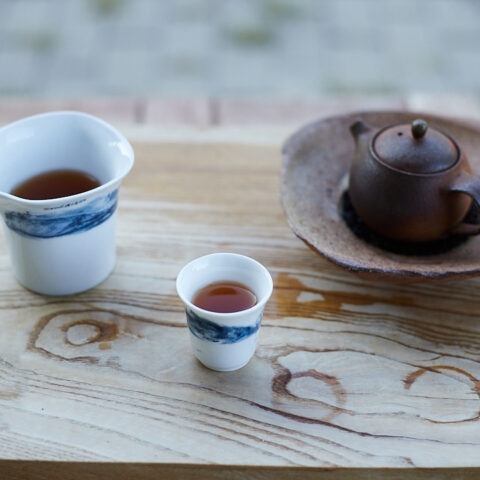
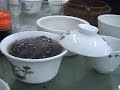
A deep forest honey aroma immediately rises from the cup, filling the air with quiet intensity. The liquor is astonishingly pure, while the opening infusions unfold a thick, robust sweetness that seems inseparable from the ancient forest itself. Even the empty cup continues to radiate warm woodland aromas long after each sip has been taken.
The following infusion reveals a noble bitterness—nutty, gently woody and remarkably persistent. Rather than fading away, it slowly transforms into an exceptionally long aftertaste. With each successive brew, rich mountain minerality emerges, completing the picture of a true old-growth forest Gaogan tea leaves.
A few infusions later, another fascinating characteristic appears. The liquor develops an almost meaty richness—substantial, fleshy and deeply satisfying—giving every sip a sense of weight and purpose. This is a serious tea, one that invites quiet contemplation rather than demanding attention through sheer power.
Its Cha Qi arrives calmly and naturally, never overwhelming, but gradually settling both body and mind. As the session progresses, sweetness returns in a more refined form, carrying delicate notes of roasted nuts and gentle spices. The finish remains unmistakably that of a classical forest-grown Yiwu ancient tree tea, leaning gracefully towards refined bitterness rather than overt sweetness. Long after swallowing, the lingering aftertaste continues to evolve, leaving behind a clean mineral sensation that quietly echoes the ancient forest from which it came.
370€
6€
7€
7€
7€
68.5€
29.7€
51.4€
29.7€
22.8€
14.3€
14.3€