


Learning to drink old new teas
I’m talking here about sheng puerh. Gushu sheng puerh only began to be produced in the early 2000s—or, more accurately, closer to 2010. Among sheng puerhs made before 2005, it is difficult to find genuine gushu teas originating from a single region or village.
I have just had a Yibang from 2017. At first, its taste seemed rather rough, woody and intense. One might say that this tea is simply bitter. But the experience reminded me of what was probably the first aged Yibang I tasted many years ago. At that time, I used to drink it solely for its Qi.
In the case of this 2017 pu-erh.sk Yibang production, I clearly remember how delicate the tea was when it was fresh.
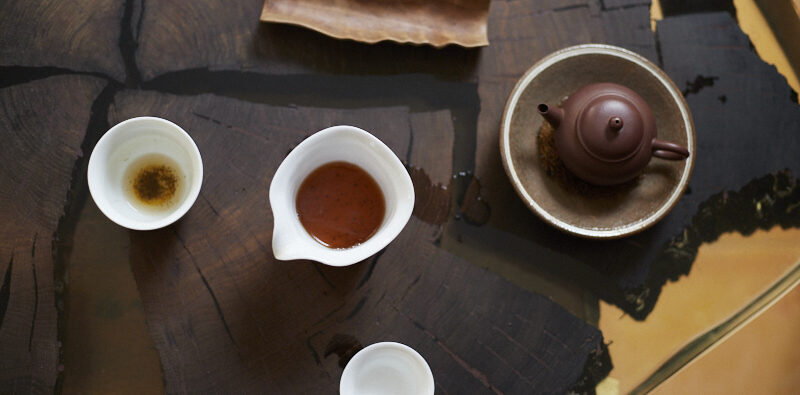
After several infusions, I began to pay closer attention—and BOOM! Beautiful minerality emerged, together with a spicy tree-bark character. I was using only the last few grams of the tea in an 80 ml Yixing teapot.
The mature notes are already so well developed that the tea could easily be mistaken for something much older. And this is after only nine years of aging in a Central European climate.
Perfect!